Makeup for Every Skin Tone: How I Customize Your Glam
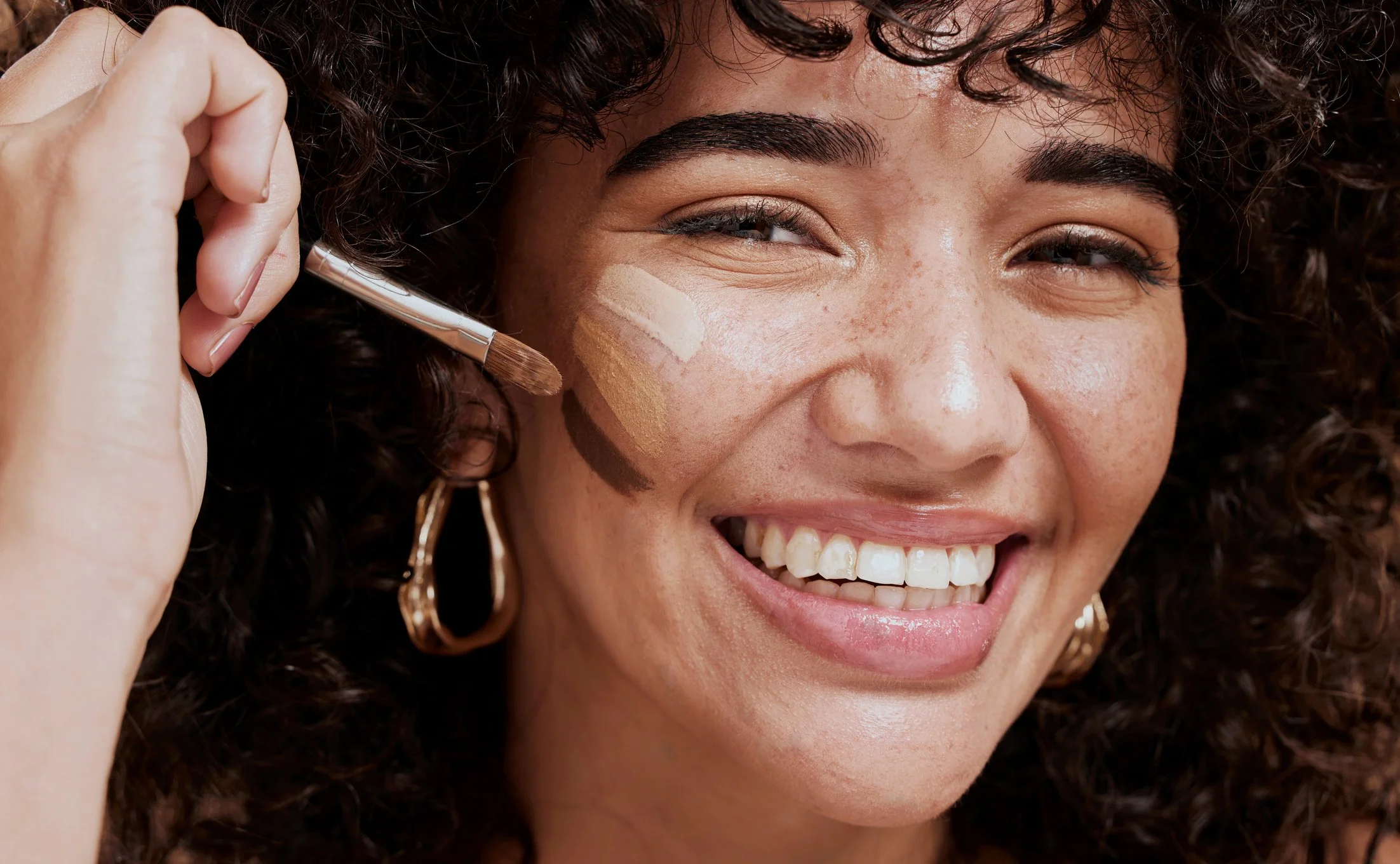
As a professional makeup artist, one of the questions I hear most often is: “What foundation is good for my skin?”
Whether you have fair porcelain skin, rich deep skin, golden olive undertones, or anything in between, great makeup is never one-size-fits-all. The secret to truly elevated glam is customization—understanding your skin tone, your undertone, and how products wear uniquely on you.
In this guide, I’ll walk you through how I customize makeup for every skin tone, how to identify your undertone, how to choose the right foundation for your skin, and simple tips you can use in your day-to-day routine.
If you’ve ever searched for “best foundation,” “foundation for my skin tone,” “makeup for dark skin,” or “best foundation for olive skin,” etc., this is for you.
Why Skin Tone Customization Matters in Professional Makeup
The right foundation, concealer, blush, bronzer, and highlight should enhance your natural coloring.
When makeup isn’t customized properly, you may notice:
Foundation that looks gray, orange, or too pink
Concealer that turns ashy under the eyes
Blush that disappears or looks muddy
Bronzer that looks red instead of warm
When makeup is customized well, the result is:
Skin that looks like skin—just perfected
Seamless blending from face to neck and décolletage
Color that enhances your features naturally
A polished, confident glow on camera and in person
Customization is what separates everyday makeup from red-carpet-level glam.
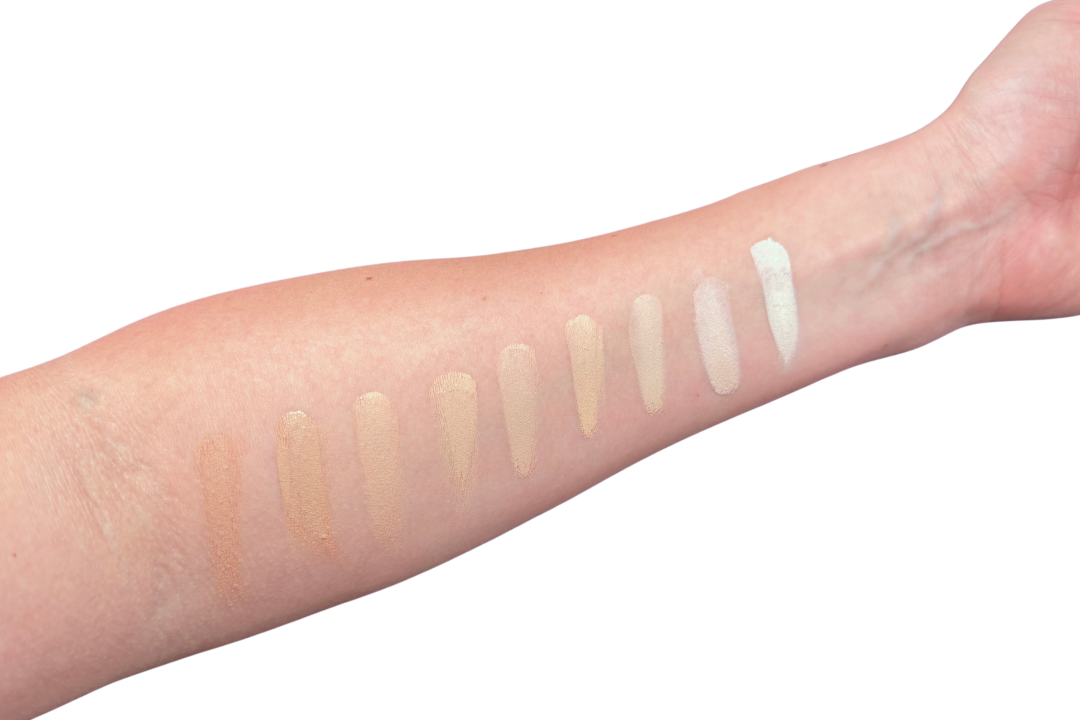
Step One: Understanding Skin Tone vs. Undertone
These two terms are often confused, but they’re different—and both matter.
Skin Tone
Your skin tone refers to the surface color of your skin. This usually falls into categories such as:
Fair
Light
Medium
Tan
Deep
Dark
This helps determine the depth of foundation you need.
Undertone
Your undertone is the subtle hue beneath the surface of your skin. This never changes, even if you tan.
The three main undertone families are:
Cool – pink, red, or bluish hues
Warm – golden, yellow, or peach hues
Neutral – a balanced mix of warm and cool
There is also a very common and often misunderstood category:
Olive undertone – a green-golden hue that can exist in light, medium, or deep skin
Knowing your undertone is the key to choosing the right foundation for your skin tone.
How I Identify a Client’s Undertone
When you sit in my chair, I don’t just match your foundation to your face—I evaluate multiple areas:
Face
Neck
Chest
Wrist/Arms/Legs
Natural Lip Color
Some quick professional clues can be:
Does your skin pull more yellow, pink, or green?
Do silver or gold jewelry look better on you?
Does your skin tan easily or burn easily?
Does foundation often turn orange or gray on you?
This allows me to choose a foundation shade that blends seamlessly into your natural coloring and photographs beautifully.
Foundation for Every Skin Tone: How I Customize
Makeup for Fair Skin
Fair skin often struggles with foundation looking too pink, too yellow, or too dark.
My approach:
Choose very light shades with the correct undertone (often pink or neutral)
Avoid heavy yellow bases unless the undertone truly calls for it
Using color corrector with concealers to avoid applying too much and making the area too white
Pro tip: If foundation looks chalky or mask-like on fair skin, it’s usually too light and the wrong undertone—and possible the wrong formula.
Makeup for Light to Medium Skin
This is one of the widest and most diverse categories.
My approach:
Carefully assess whether undertones are warm, neutral, or olive
Mix two-three foundation shades when needed for a perfect match
Adjust with bronzing drops for seasonal changes
Pro tip: If your foundation looks good indoors but off outdoors, the undertone is usually the issue.
Makeup for Olive Skin
Olive undertones are beautiful—and often the hardest to match.
Common struggles:
Foundation turning orange
Foundation looking gray or flat
Blush pulling too red
My approach:
Choose olive-based or neutral-warm foundations
Avoid strong pink or peach bases
Use golden bronzers & appropriately vibrant blush shades
Pro tip: If most foundations turn orange on you, you likely have an olive undertone—even if your skin is light or deep.
Makeup for Tan and Deep Skin
Deep and rich skin tones deserve foundations that enhance—not dull—their natural glow.
My approach:
Match shade first, then fine-tune undertone
Avoid foundations that turn ashy or gray
Use correctors under the eyes and around the mouth before any foundation or concealer
Layer warmth strategically with bronzer and blush
Pro tip: If foundation looks gray on deep skin, it usually lacks warmth or is too light in depth.
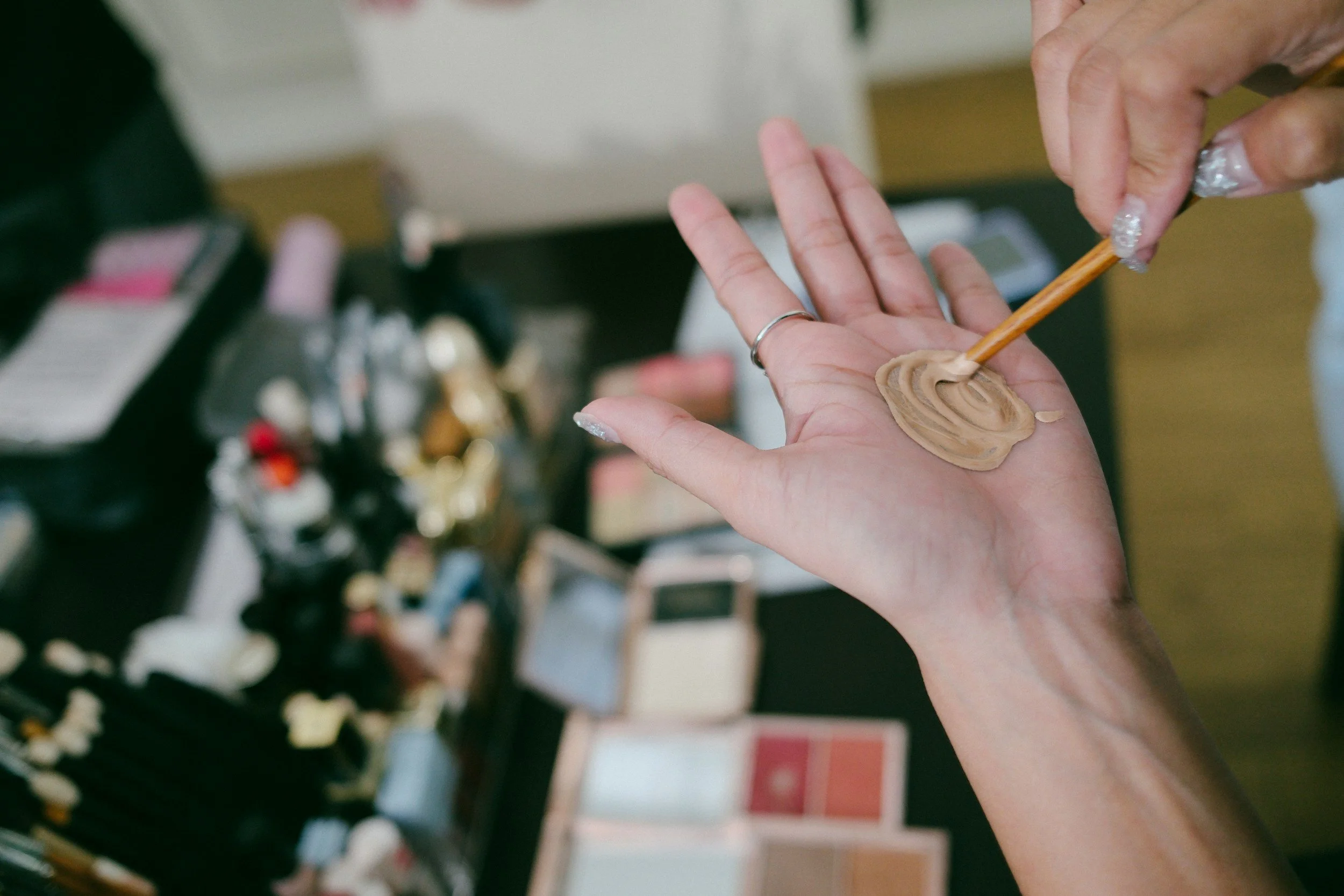
My Professional Foundation Matching Process
For every client, I:
Step back to assess their coloring; observe their skin, hair, lips, etc.
Assess their undertone
Custom mix a foundation and adjust as needed
Check in cool light (daylight), which is the harshest and will give you the best overall match
Apply all over and blend into the face, neck, and chest seamlessly
This is why professional matching often looks better than store testing—it’s a full process in good light, not a quick swipe.
Day-to-Day Tips for Choosing the Right Foundation
Here are practical tips you can use when shopping for your own foundation.
1. Always Test on Your Jawline
Not your hand. Not your wrist. Your jawline shows how it blends with both face, neck, & shoulders.
2. Check in Natural Light
Store lighting can be misleading. Step near a window or outside always.
3. Watch for Oxidation
Wait 5–10 minutes before deciding. Walk around the store and browse a different product. Some foundations can darken, lighten, or turn orange.
4. Know Your Undertone
If you pull pink: look for cool or neutral shades
If you pull yellow/golden: look for warm shades
If the cool shades are too cool and the warm shades are too warm, you’re probably nuetral
If foundations turn orange or gray: test olive-friendly shades
5. Don’t Be Afraid to Mix
Two shades mixed often look better than one “almost right” shade and allow you two times the product, and adjusters for when you get a little more sun!
Why Customized Glam Makes Such a Difference
When makeup is customized to your skin tone and undertone:
Your skin looks like skin, not “cakey” or heavily made up
Your features are enhanced naturally
Your makeup photographs beautifully
You feel confident in every light
This is the level of detail I bring to every client—whether it’s for a red carpet, photoshoot, special event, or wedding.
Final Thoughts: Your Skin Deserves Custom Glam
There is no single “best foundation for everyone.” There is only the best foundation for your skin’s needs, your skin tone, your undertone, and your lifestyle.
Understanding your coloring is the foundation of great makeup—and once you have it, everything else becomes easier, including choosing the right foundation formula for you!
If you’re ever unsure of your undertone or foundation match, working with a professional can save you years of trial and error. Because the best makeup doesn’t change who you are—it reveals it.
Not sure if your foundation truly matches your skin?
Click here to get my in-depth guide on how to avoid using the wrong foundation.
-Ruth
Other Blog posts you might enjoy: